


Back in 2010, Joko Widodo, mayor from the city of Solo in Indonesia’s Central Java province, made a national headline by winning an award as the third best mayor in the world for bringing reforms to city, among others by cleaning up the city’s slum areas.
His popularity was then unstoppable following his election as Governor of capital Jakarta. It didn’t take him long to move up to a higher position and announced his candidacy for the 2014 Indonesian Presidential Election.
Months in the lead-up to the election, his electability was way ahead that of his rival former general Prabowo Subianto.
Long story short, Widodo won one of the most bitterly divided election in Indonesia and became the 7th Indonesian President. He also won the re-election in 2019 by a landslide.
Fast forward to 2023, a nearly similar scenario unfolded in the world’s third largest democracy.
This time, it’s another name from the same political party of Widodo and with almost similar political and socio-cultural backgrounds.
Indonesia’s ruling party the Indonesian Democratic Party of Struggle (PDI-P) announced its much anticipated candidate for the upcoming 2024 Indonesian presidential election.
The party’s pick is now on Ganjar Pranowo, governor of the same province of Jokowi and is the second most populous country in Indonesia (around 13% of the country’s population) with the second largest number of voters (around 17,000,000 voters in 2019 election).
The announcement, made by the party’s chairwoman Megawati Soekarnoputri, came after months of speculation and prediction as to who will be the presidential nominee of the party.
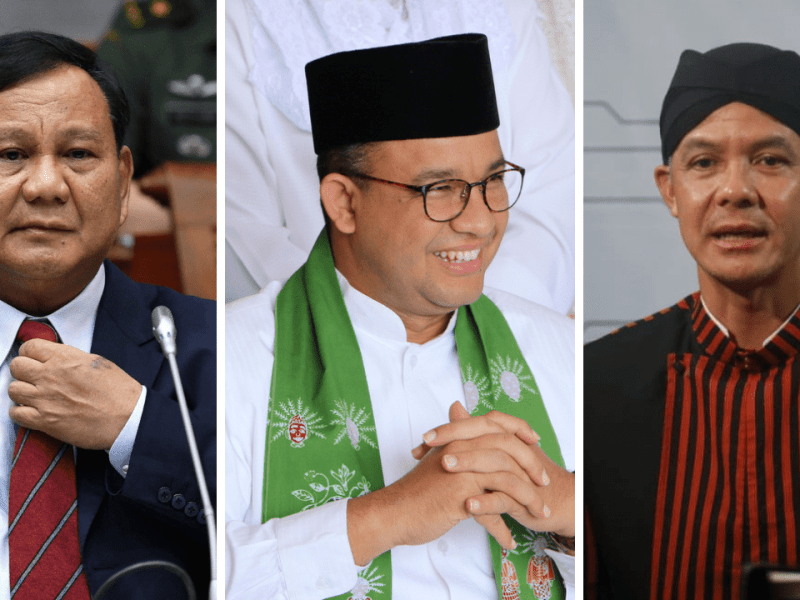
Pranowo has so far led presidential election polls, way ahead former Jakarta governor and right-leaning politician Anies Baswedan and Subianto, who is now Jokowi’s own Defense Minister.
Following his nomination, Pranowo commented: “It is an honor but also not an easy task for me. It is our momentum to consolidate and unite powers. One for all, all for one.”
Widodo also backed the nomination of his fellow party cadre, describing him as “a leader who is close to the people and always grounded.”
“The change of leadership should not turn away from the continuity of Indonesia’s national progress that must continue,” Widodo said.
To be fair, the appointment of the 55-year-old Pranowo came as no surprise, not only because he’s been leading in almost all polls – which is probably the most important factor for the party to pick him in the first place – but also because he ticks almost all of the boxes just like his predecessor Widodo.
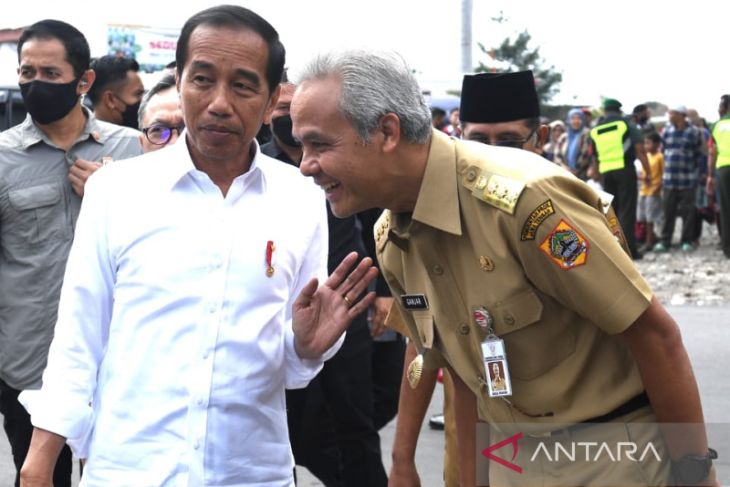
For a start, Pranowo is male, Javanese (the largest ethnic group in Indonesia), and is a [moderate] Moslem. Most of the Indonesian Presidents so far – with the exception of Megawati (Indonesia’s first female President) and late BJ Habibie from Bugis cultural background – have those three qualifications.
Pranowo’s nomination, and if and when he is elected President, will perpetuate the pattern.
Both Pranowo and Widodo also previously served in a position lower than a president, with the differences being that Pranowo was a member of the House of Representatives before he became Central Java’s governor, unlike Widodo who was formerly mayor and a businessman before entering politics.
The question now is what will make Pranowo set apart from Widodo in terms of policies? It’s hard to tell yet.
As Widodo said that “the change of leadership should not turn away from the continuity of Indonesia’s national progress that must continue” so it is likely that there will be nothing really new in Pranowo’s policies as he will probably “continue” Widodo’s policies,
However, Pranowo’s vice president pick will be interesting to look forward to.
In 2019, Jokowi surprised the nation by picking cleric Ma’ruf Amin as his VP pick, allegedly to attract Moslem and conservative voters. It remains to be seen whether Pranowo will follow suit or pick a VP that will be “ideologically” similar to him. Since 2012, Indonesian Presidential elections have been divided along the lines of “nationalist” camp and “conservative religious” camp, with Jokowi camp considered on the “nationalist” camp, while Prabowo camp on the “conservative religious” camp, evidenced by the support of conservative religious groups.
There’s probably chance that Pranowo will pick a VP who is non-Javanese just like several previous candidates did to attract non-Javanese voters.
To make matters more interesting, if both Subianto and Baswedan decide to run and there will be three pairs competing in the election, the election landscape would also be different. For almost a decade, Indonesian voters have always only had two pairs in Presidential election. Will this time voters have more options? It remains to be seen.
Other factors will probably make differences in the outcomes of next year years election including Gen Z voters, TikTok, and others.
In some respects, Indonesian politics is painfully predictable, following the same pattern but in some other aspects, it can be interestingly unpredictable and entertaining.

 ersanpamungkas.com
Leave a comment