

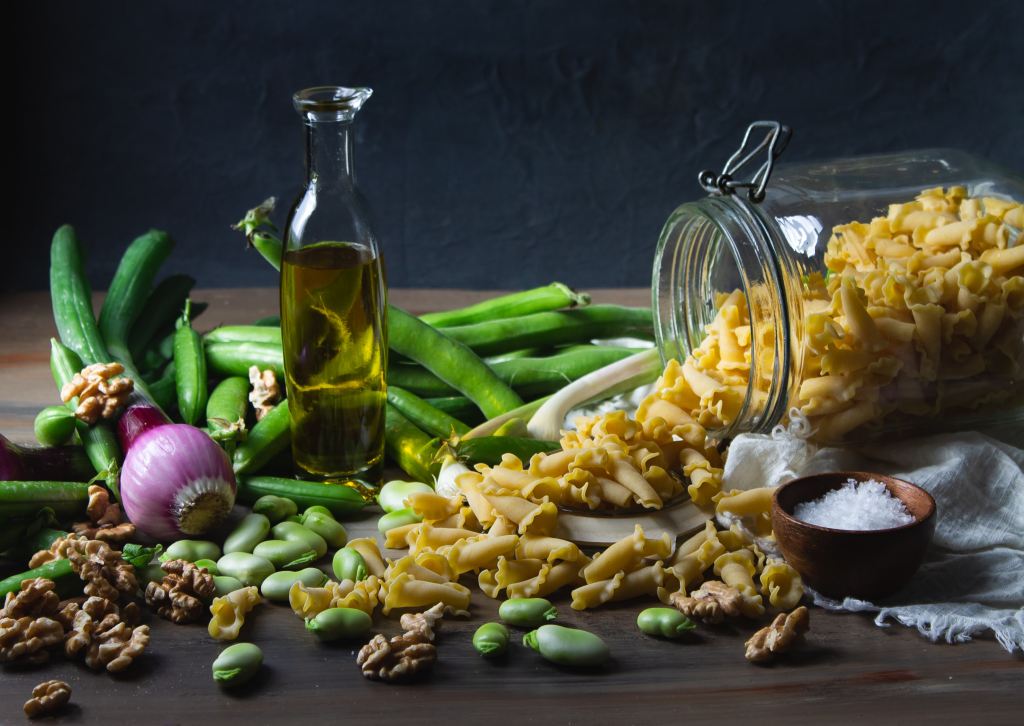
If there’s one thing most Indonesians can’t simply live without, perhaps it would be cooking oil.
Suffice to say, cooking oil for most of us are as essential as rice, food, or even water. We rely heavily on it to cook most of our food.

Inevitably, in the wake of the cooking oil shortage crisis that recently gripped our country, scenes of people lining up at markets or convenience stores to purchase this glimmering liquid so desperately needed by our nation filled our news and our social media timeline.
Even as of time of writing, cooking oil in many shops or stores, including in the city I currently reside, is still few and far between. My sister’s daily grumble of her struggle to find cooking oil has become increasingly commonplace for me these days.
This phenomenon has made me ponder: why is it that so many Indonesians heavily rely on cooking oil as if they could not live without it? Perhaps they – or we – can’t.
Why is it that cooking oil has become so indispensable in our lives that the shortage has given rise to some sort of national crisis?
And is frying really the *only* way to cook our food?
I believe this phenomenon has something to do with what we eat and how we cook our food. Remember when the toilet paper crisis hit several countries? It created commotion.
Imagine if the same crisis had happened in our country. I’m sure people would have barely talked about it because in fact very few of us use toilet paper on a regular basis. But the same thing doesn’t happen with the current cooking oil crisis.
It is so important for most of us.
Let’s take a moment to reflect on eating habits among the average Indonesians.
We fry many of our food. Who doesn’t know the much beloved ayam goreng (fried chicken)? Anywhere you go, you wouldn’t encounter major difficulties finding stalls or restaurants providing this food, which is usually deep-fried and served with rice and sambal (chili sauce).
And let’s not forget everyone’s favorite: the ubiquitous gorengan. It’s everywhere. It’s cheap. It’s mouth-watering for most of us.
Fried foods are also common items that fill our plates for breakfast, lunch or dinner. Ayam goreng is certainly not the only one. We have other favorites too: tahu goreng, tempe goreng, ikan goreng, dadar telor, and the list is goes on.
As if they were not unhealthy enough, some people even have the guts to combine those fried food with food served with santan (coconut milk) – which arguably can pose health risks when consumed regularly. Go to the nearest Padang restaurant and see it for yourself.
This is just a glimpse of the eating habit of the average Indonesians and examples of food most people – including yours truly – consume regularly. And examples of food that rely heavily on the use of cooking oil in the making process.
True, they taste heaven. No doubt, they’re affordable for most Indonesians.
However, another question is: are they also healthy? Factually, they’re not and part of the reason is because of the frying it entails in the cooking process.
I believe there is a direct correlation between our health and what we consume on a regular basis.
According to the latest WHO date published back in 2018, life expectancy in our country is male 67,3 and female 71.4 with the total life expectancy standing at 69.3. This places Indonesia in the ranking of 124. The data also shows that four of the leading causes of death here are coronary health disease, stroke, tuberculosis, and diabetes melitus.
Health experts have also warned that regularly eating fried foods is closely associated with a higher risk of developing heart problems. Fried foods are high in saturated fat and trans-fat, promoting plaque buildup in arteries that can put us at risk for coronary artery disease, hear failure, heart attack and, stroke. It sounds awful.
If we aim to seriously address this grave health issue, apart from the government’s policy to provide health facilities that are of better quality and improved quality our health workers, I believe that evaluating our eating habit – and the food we eat – can also be a positive and encouraging start.
The cooking oil crisis certainly calls for concrete actions and policies to address it. I’m not an economist who can propose strategies or ways to prevent it from happening again. I just hope the crisis can end soon (so my sister can stop grumbling).
However, as a layman I do hope this crisis can give us a valuable lesson and a moment of reflection to evaluate our eating habits and become a turning point for us a nation.
I’m not saying the government must lead the crusade to encourage people to stop eating fried food. There’s a snowball’s chance in hell that could happen. Rather, I do hope the government – and all of us – can use this moment to start paying more attention to and promote other alternative ways to cooking such as steaming, boiling or poaching that are perhaps less evil than cooking.
Around twenty years ago, kerosene could be literally found in nearly every household across the archipelago. Today it’s extremely rare that perhaps for those born after 1990, they have no idea that their parents used to heavily rely on it. If the campaign to discontinue using kerosene and replace it with LPG could be a major success, why can’t we do the same with cooking oil?
Again, I don’t think we can completely stop people from using cooking oil. What we can do, however, is reduce it and promote and popularize alternative ways to cook.
The government can perhaps collaborate with public figures, social media influencers, or influential cooking show hosts or chefs for this noble cause. It would be a painful long process but I guess it’s better than not doing anything and letting our people continue to be heavily dependent on cooking oil. And above all, to live an unhealthy lifestyle.
If we correlate this to the one of the points stated by James Clear in his famous book Atomic Habits, it is said that it doesn’t necessarily take gargantuan measures to improve our lives. Equally, I believe small but consistent actions are important to improve the health of our nation collectively. What we need to do is to gradually change our habits bits by bits, predominantly our eating habits, including for example by cutting down on fried food.
Ultimately, promoting and campaigning for a healthy life, including promoting and campaigning for eating well, is a lot less challenging and expensive than providing treatment for our people. And I believe that one of the measures we can take is to go easy on using cooking oil.


 ersanpamungkas.com
Leave a comment